
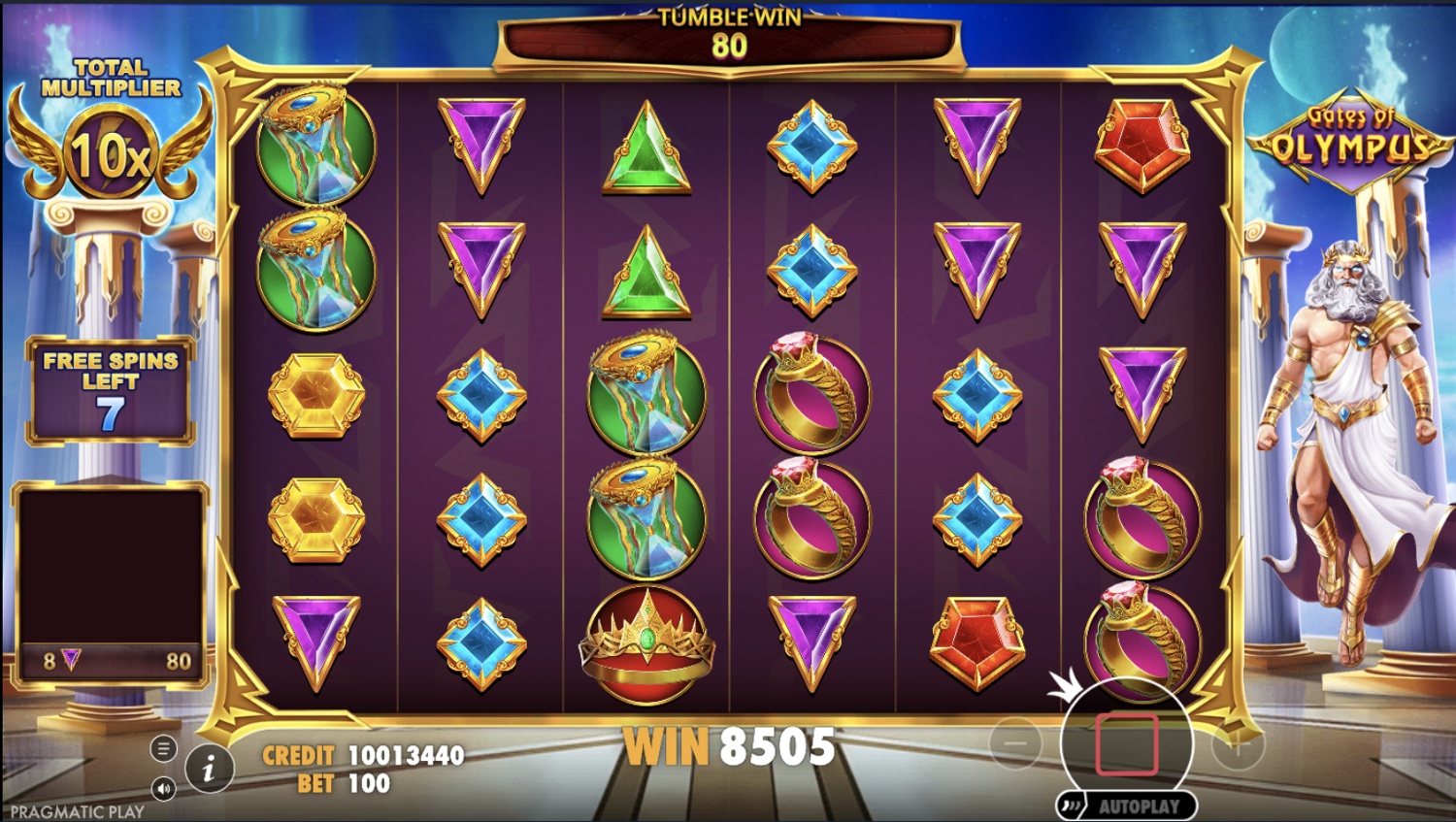
Hit rate is among the most misunderstood yet important concepts in online slot gaming. While return to player percentages and volatility often lead discussions, hit rate offers a different story, one that directly affects a player’s moment-to-moment experience. In simple terms, hit rate is the frequency with which a slot delivers any kind of win, expressed as a percentage of total spins. A game with a 25% hit rate will, on average, produce a winning combination once every four spins. This does not reveal the size of those wins, only how often the reels light up. For anyone trying a title like Gates of Olympus 1000, understanding hit rate offers a practical lens through which to view the game’s rhythm. The slot, developed by Pragmatic Play, uses a scatter-pays mechanic on a 6×5 grid, and its high volatility means hit rate is inclined to be lower than in many low-variance alternatives. By examining what hit rate really means, how it coexists with other mathematical models, and what to expect when spinning the reels Gates of Olympus 1000 bet on sports, players can make more informed decisions and set realistic expectations before they ever place a bet.
Special Features and Their Effect on Win Rate
Special features in Gates of Olympus 1000 are not simply add-ons; they essentially reshape the game’s hit-rate dynamics when they are active. The most prominent feature is the multiplier symbol, which appears as a winged orb in different colours and can land on any spin, in both the base game and during free spins. These multiplier symbols hold random values spanning 2x to 1,000x, and they do not require being part of a winning cluster to activate. When at least one multiplier symbol is on the grid on the grid at the same time as any winning combination, the total win for that tumble sequence is multiplied by the sum of all visible multiplier values. This mechanic does not raise the raw hit rate, the chance of landing a winning cluster, but it greatly amplifies the payout when a hit takes place. From a player’s perspective, the inclusion of multiplier symbols turns an normally modest hit into a substantial event, shifting the perceived value of each winning spin. Because multipliers can appear on non-winning spins and remain inactive, they create a layer of near-miss tension that holds players engaged even during dry spells.
The complimentary spins feature is where hit rate and reward ceiling hit their maximum. Initiated by landing four or more Zeus scatter symbols on the reels, the bonus feature awards 15 starting free spins. During this feature, multiplier symbols become even more powerful because they are collected in a total multiplier meter that does not reset between spins. Every time a multiplier symbol lands during a free spin, its value is added to the cumulative multiplier, and that ongoing tally is factored to any winning tumble sequence for the rest of the round. This means that as the free spins continue, the effective payout per hit grows, even if the hit rate itself remains consistent with the base game. Moreover, hitting three or more scatters during the feature reactivates five additional free spins, extending the bonus and further increasing the multiplier. The free spins round essentially bundles a large portion of the game’s RTP into a fairly rare event, which is characteristic of high-volatility slots. The hit rate during free spins is comparable to the base game in terms of cluster frequency, but the escalating multiplier signifies that the monetary impact of each hit is amplified. Players who understand this mechanic can better recognize why long periods of base game play with few wins are intentional, the game is holding its firepower for the bonus round where the total multiplier can turn a single hit into a massive payout.
The Calculations Regarding Hit Rate: RTP, Volatility, and the Payout Table
Hit rate does not exist in isolation; it is woven into the mathematical fabric of a slot in conjunction with RTP and volatility. Return to player, or RTP, signifies the expected percentage of all wagered money that a game will pay back over an exceptionally large number of spins. Gates of Olympus 1000 carries an RTP of 96.50% in its standard configuration, though operators may offer marginally lower settings, so players should always check the exact figure in the game’s information panel. Crucially, RTP says nothing about how that return is distributed. A slot could reach its 96.50% RTP by paying out frequent tiny amounts or by awarding rare massive jackpots. Hit rate fills in this gap by defining the frequency of those payouts. In high-volatility games like this one, a substantial portion of the RTP is centered in the bonus round and in the high-value multiplier combinations. The base game hit rate might sit around one win in four or five spins, but many of those base wins will be limited, perhaps returning only a fraction of the stake. The game’s paytable indicates why: lower-paying gem symbols appear more often and form clusters more readily, while the higher-value ring, goblet, and crown symbols pay significantly more but land less frequently. The scatter symbol, represented by Zeus, does not offer a direct payout in the base game but is the key to the free spins feature, and its appearance rate is calibrated to keep the bonus frequency at a level that supports the overall math model.
To understand the mathematics more thoroughly, look at how the game’s random number generator works in conjunction with the symbol weights. Every symbol on each reel position is not equally likely; lower-paying gems are weighted more densely, which boosts the base game hit rate because clusters of eight or more are easier to form with common symbols. However, the payouts for these clusters are small, often between 0.25x and 1x the bet for eight or nine matching gems. The premium symbols, such as the ring and the hourglass, appear less often but can pay up to 50x the bet for a cluster of 12 or more. This weighting structure generates a hit-rate profile where the player undergoes frequent small wins that partially offset losses, but the real equity is held in the less frequent high-paying clusters and the multiplier-enhanced tumbles. Volatility, in this context, is the mathematical expression of that uneven distribution. Gates of Olympus 1000 is rated as high volatility, meaning the variance is steep; bankroll swings can be dramatic, and long losing streaks are part of the design. The hit rate, therefore, is the player’s frontline experience of volatility. By studying the paytable and noting how often any win occurs, a player can gauge whether the game’s pace matches their personal tolerance for risk. While the exact hit frequency is a proprietary figure, community testing and simulation imply that the base game hit rate likely falls in the range of 20% to 25% when accounting for the tumble feature, though individual sessions will vary considerably.
Understanding Hit Rate and Why It Matters in Slot Games
Hit rate, often referred to as hit frequency, is the statistical likelihood that a individual spin will yield at least one winning combination. It is shown as a percent, and it is totally distinct from the size of the payouts. A slot could feature a elevated hit rate of 40% but give very low amounts, while another might hit only 15% of the time yet deliver substantial wins when it does. In the scope of Gates of Olympus 1000, the hit rate is not officially published by the provider, but players can deduce a lot from the game’s design. High-volatility slots with big maximum win capabilities, such as the 15,000x bet on offer here, typically work with a lower hit frequency. Veteran players often see that wins occur less frequently, but the tumble feature and multiplier mechanics can string together multiple payouts from a single paid spin, which muddies the raw hit-rate figure. Grasping this metric is important because it straightforwardly influences bankroll management and session length. A player who sits down expecting common small wins on a game with a 20% hit rate may rapidly become frustrated, while someone who knows the rhythm can adapt bet sizes and patience accordingly. Hit rate also influences the emotional pace of play; fewer hits mean extended dry spells, but when a series of tumbles triggers, the thrill is amplified specifically because wins are infrequent. This emotional dimension is why hit rate deserves as much focus as RTP and volatility when judging any slot.
To appreciate hit rate completely, it helps to separate it from the notion of volatility, despite the fact that the two are related. Volatility defines the arrangement of win sizes and the level of risk over a session, while hit rate just tallies how many spins return something above zero. follow this link A high-volatility game like Gates of Olympus 1000 can nevertheless have a average hit rate if its base game features many small symbol clusters, but the inclusion of multiplier symbols and the free spins feature changes the average payout upward, making the dry spells more noticeable. The scatter-pays mechanic, which needs at least eight matching symbols anywhere on the 6×5 grid, also has a role. Because symbols do not have to match on fixed paylines, the game can produce wins from scattered positions, which can slightly raise the hit frequency compared to traditional line-based slots with the same grid size. Nevertheless, the requirement of eight or more identical symbols is a relatively high threshold, and it keeps the hit rate in check. Players who track their spin history will see that dead spins, those that yield nothing, are frequent, but a single tumble cascade can transform a non-winning spin into a winner as new symbols drop into place. This mechanic effectively increases the real-world hit rate per paid spin because the game keeps checking for new wins without an additional wager. For anyone serious about comprehending Gates of Olympus 1000, recording how often the reels deliver any return, even a tiny one, is a useful exercise that shows the game’s true tempo.
Common Questions
What is hit rate in Gates of Olympus 1000?
Win frequency, or hit frequency, is the percentage of spins that lead to at least one winning combination. In Gates of Olympus 1000, the specific figure is not disclosed, but due to its high volatility and scatter-pays mechanic, it is calculated to fall between 20% and 25% when accounting for the tumble feature. This suggests approximately one in four or five spins produces a win, although many of these wins will www12.statcan.gc.ca be modest base-game clusters.
How does the tumble feature impact the hit rate?
The tumble feature eliminates winning symbols and allows new ones to cascade into the empty positions, in some cases creating additional wins from the same paid spin. This essentially boosts the real-world hit rate per spin sequence because a spin that initially shows no winning cluster can turn into a winner after one or more tumbles. It offers players multiple chances to hit a payout without placing another bet.
What’s the RTP of Gates of Olympus 1000 and how does it correspond to hit frequency?
The standard RTP is 96.50%, though operators may offer lower versions. RTP quantifies the long-term payback percentage, while hit frequency tells how often wins take place. A high-volatility game like this allocates much of its RTP through uncommon large wins, meaning the hit rate is lower than in low-volatility slots, but the wins that do occur can be significantly larger when multipliers are present.
How exactly do multiplier symbols affect the game’s hit-rate perception?
Multiplier symbols do not affect the probability of landing a winning cluster, so they do not change the raw hit rate. However, when they appear alongside any win, they multiply the payout by values from 2x to 1,000x. During free spins, multipliers build up in a total meter, making each hit significantly more lucrative and transforming modest clusters into significant payouts, which changes the perceived impact of every winning spin.
What’s the maximum win and how often can it feasibly be hit?
The maximum win is 15,000 times the total bet. This is an incredibly rare event, typically requiring the free spins feature with a large accumulated multiplier and a high-paying symbol cluster. The base game hit rate alone cannot yield such a win. It is mathematically an outlier, and players should see it as a long-term possibility rather than a regular occurrence during normal sessions.
How numerous are free spins are awarded and how are they triggered?
The free spins feature is activated by landing four or more Zeus scatter symbols anywhere on the reels. This grants 15 initial free spins. During the round, any multiplier symbols that appear are accumulated to a cumulative total multiplier that does not reset, and landing three or more scatters retriggers an additional five free spins, extending the bonus and increasing the potential for massive multiplied wins.
What bet size is recommended based on the game’s hit rate?
Considering the relatively low hit rate and high volatility, it is advisable to pick a bet size that permits at least 200 to 300 spins during your session bankroll. As an illustration, with a £100 budget, a bet of £0.40 or lower provides a comfortable cushion. This approach aids withstand the dry spells that are integral to the game’s design and boosts the chance of staying in play until the bonus feature kicks in.
Columns and Lines and Ways to Succeed: In What Manner Game Structure Influences Hit Rate
The organizational design of Gates of Olympus 1000 is a 6-reel, 5-row grid that does away with standard paylines completely. Instead, it uses a scatter-pays system, where successful combinations are created by landing eight or more matching symbols anywhere on the reels. This design choice has a direct and quantifiable impact on hit rate. In a conventional slot with, say, 20 predetermined paylines, a winning combination requires symbols to appear on certain consecutive positions from left to right. The probability of getting a win is restricted by the count of paylines and the arrangement requirements. By removing paylines and allowing symbols to award in any position, the game significantly boosts the count of feasible winning setups for each spin. A group of eight same gems can appear in the top-left corner, scattered across the middle, or concentrated on the right side, and each setup counts as a win. This adaptability has a tendency to raise the base game hit rate in comparison to a line-based slot with a similar grid size, because the game does not discard symbol arrangements that land outside fixed payline paths. However, the threshold of eight symbols functions as a balancing factor; it is elevated enough to prevent the hit rate from turning overly frequent, which would undermine the high-volatility characteristic and the max win possibility.
The grid dimensions themselves matter. With 30 symbol positions on every spin, the game has ample space for clusters to form, but the random distribution means that many spins will still result in no qualifying cluster. The tumble mechanic further complicates any simple hit-rate calculation. After every winning combination, the winning symbols are removed, and new symbols cascade down to fill the empty spaces. This process repeats as long as new winning clusters appear, all from a single paid spin. From a hit-rate perspective, the tumble feature effectively gives the player multiple chances to land a win without placing an additional bet. A spin that initially shows no winning cluster can still become a winner if the cascade brings down the right symbols. In practice, this means the effective hit rate per spin sequence is higher than the hit rate of the initial grid state. Players who track their results will notice that many winning spins are actually the product of one or more tumbles rather than the original symbol drop. The scatter-pays system and the tumble mechanic work together to create a dynamic where dead spins are common but rarely feel entirely hopeless, because the cascading reels introduce an element of anticipation. This structural interplay is one of the defining characteristics of Gates of Olympus 1000 and a key reason why its hit-rate experience differs from that of more static slot formats.
A Guide to Playing Gates of Olympus 1000: An In-Depth Guide with Hit Rate as a Consideration
Starting a session on Gates of Olympus 1000 begins with getting to know the game interface and the fundamental mechanics that influence hit rate. Once the game loads, the 6×5 grid is located beneath a majestic Mount Olympus backdrop, with Zeus floating to the side. The first practical step is to identify the information button, often marked with an “i” or a menu icon, and access the paytable and game rules. In this section, players can verify the exact RTP, review the symbol payouts for clusters of eight to thirty matching symbols, and study the detailed explanations of the tumble feature, multiplier symbols, and free spins trigger conditions. Comprehending the paytable is important because it shows the hierarchy of symbols and offers a idea of how often each symbol type might affect the hit rate. The lower-paying gems will constitute the bulk of base game wins, while the premium symbols are the ones to look out for during multiplier-heavy sequences. The scatter symbol, showing Zeus holding a lightning bolt, is the key to the free spins round, and noting that four or more are required creates a definite target for every spin.
Once the rules are established, choosing the bet amount is the subsequent critical choice. The bet change options, typically plus and minus buttons, allow the player to cycle through the offered stake levels. With hit rate considered, it is advisable to choose a bet that represents a small fraction of the total session bankroll. A typical guideline is to make sure that the bankroll includes at least 250 spins, so a player with £100 might adjust the bet at £0.40 or less. After finalizing the bet, the spin button triggers the reels in motion. Players can also employ the autoplay function, where available, to establish a fixed number of spins and possible loss or single-win limits. While autoplay does not change the hit rate, it can help maintain discipline by systematically halting the session if a losing streak depletes the balance to a certain point. During play, the tumble mechanic will often engage after a win, and the multiplier symbols will show up with their values presented. Monitoring how often the grid generates any win, even a small one, provides a real-time impression for the session’s hit frequency. If the game seems unusually cold, it is simply variance at work, and no amount of bet modifying will alter the underlying probability. The most vital rule when gambling with hit rate in mind is to consider each spin as an isolated event and to refuse the temptation to chase losses, because the game’s design ensures that both dry spells and dramatic winning sequences are part of the same mathematical framework.
Wager Range, Max Win, and How Hit Rate Influences Your Approach
Gates of Olympus 1000 offers a adaptable bet range that serves a diverse array of players, from careful beginners to high-roller players. The minimum bet usually begins at 0.20 per spin, while the maximum can hit 100.00 or more, according to the casino operator’s configuration. The game’s maximum win is capped at 15,000 times the total bet, a figure that positions it firmly in the high-potential category. When these parameters are merged with the game’s hit-rate profile, a well-defined strategic picture develops. Because the hit rate is fairly low and the volatility is high, the distance between wins can be significant, and the base game often wears down a balance through countless non-winning spins. A player who stakes too high relative to their bankroll risks exhausting their funds before the free spins feature or a large multiplier sequence can activate. Alternatively, betting too low may make the session seem uneventful and reduce the impact of the rare big wins. The key is to find a bet size that permits at least 200 to 300 spins, offering the game’s mathematical model enough room to traverse its variance. This approach does not guarantee a bonus round, but it coordinates the session length with the hit-rate expectations, minimizing the likelihood of an abrupt bust.

Comprehending hit rate also guides decisions about when to modify bet sizes. Some players adopt a strategy of starting with smaller bets to gauge the game’s rhythm, then raising the stake slightly if the session has been particularly cold, hoping that the eventual bonus round will make up for the accumulated losses. While no strategy can alter the game’s fixed RTP or hit frequency, managing bet size in response to the observed hit pattern can be a useful way to lengthen playtime and stay within a predetermined loss limit. The max win of 15,000x is statistically an outlier event, and the path to such a win almost always runs through the free spins feature with a substantial accumulated multiplier. The base game hit rate alone will never produce a win of that magnitude; it is the combination of a rare high-paying symbol cluster, multiple multiplier symbols, and the bonus round multiplier that creates the headline number. Players who absorb this relationship between hit rate, bet size, and max win are better positioned to appreciate the game for what it is, a high-volatility thrill ride where patience and discipline are rewarded over the long term. Consulting the game’s information panel for the exact RTP and bet limits before playing is always a wise first step, as these figures can vary slightly between different online platforms.